
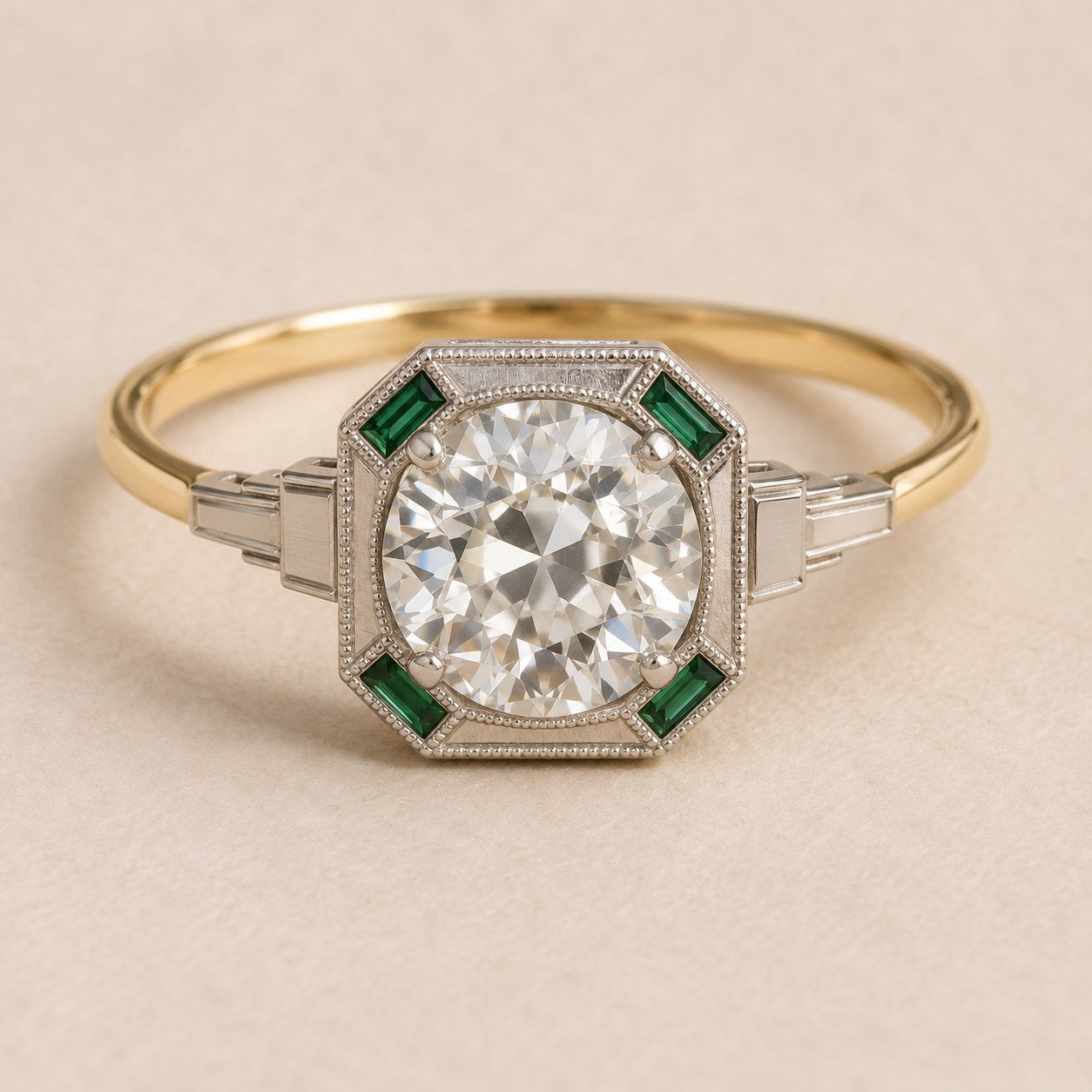
A coloured gemstone engagement ring is a statement of individuality, and the three precious stones each have a distinct character. Here is how they compare for a ring that will be worn every day for decades.
Sapphire: the most practical choice
Sapphire is corundum, rated 9 on the Mohs hardness scale, which makes it one of the toughest gemstones for everyday wear. Most people picture blue, but sapphires come in almost every colour: teal, peach, pink, yellow and grey among them. Teal sapphires, which sit between blue and green, have become one of the most sought-after engagement stones. Read our teal sapphire guide for more.
Ruby: sapphire’s red sibling
Ruby is also corundum, so it shares sapphire’s hardness of 9. Its colour ranges from pinkish to deep crimson. Rubies have been associated with passion and devotion for centuries, and they pair beautifully with diamonds and yellow gold. In our Art Deco designs we often use rubies as calibré-cut accents framing a white diamond, as in the Odeon.
Emerald: beautiful, but needs care
Emerald is beryl, rated around 7.5 to 8 on the Mohs scale, and most emeralds contain natural inclusions that jewellers call the “jardin”, or garden. That makes emeralds more vulnerable to knocks than sapphires or rubies. They are still a wonderful engagement stone with a protective setting such as a bezel or a signet, and with the habit of taking the ring off for the gym or gardening. See the Octavia for an example.
Comparing the three at a glance
| Stone | Mohs hardness | Everyday wear | Best setting |
|---|---|---|---|
| Sapphire | 9 | Excellent | Any |
| Ruby | 9 | Excellent | Any |
| Emerald | 7.5 to 8 | Good, with care | Bezel or signet |
Which metal suits which stone?
Yellow gold warms rubies and emeralds and gives them a vintage richness. White gold or platinum cools and sharpens blue and teal sapphires. Rose gold is lovely with peach and pink sapphires. Browse emerald, ruby and sapphire engagement rings or speak to us about a bespoke stone.
Leave a Reply