Art Deco is the design language of the 1920s and 1930s: confident, geometric and glamorous. It took its name from the 1925 Exposition Internationale des Arts Décoratifs et Industriels Modernes in Paris, and it shaped everything from skyscrapers and ocean liners to cinemas and jewellery.
The look
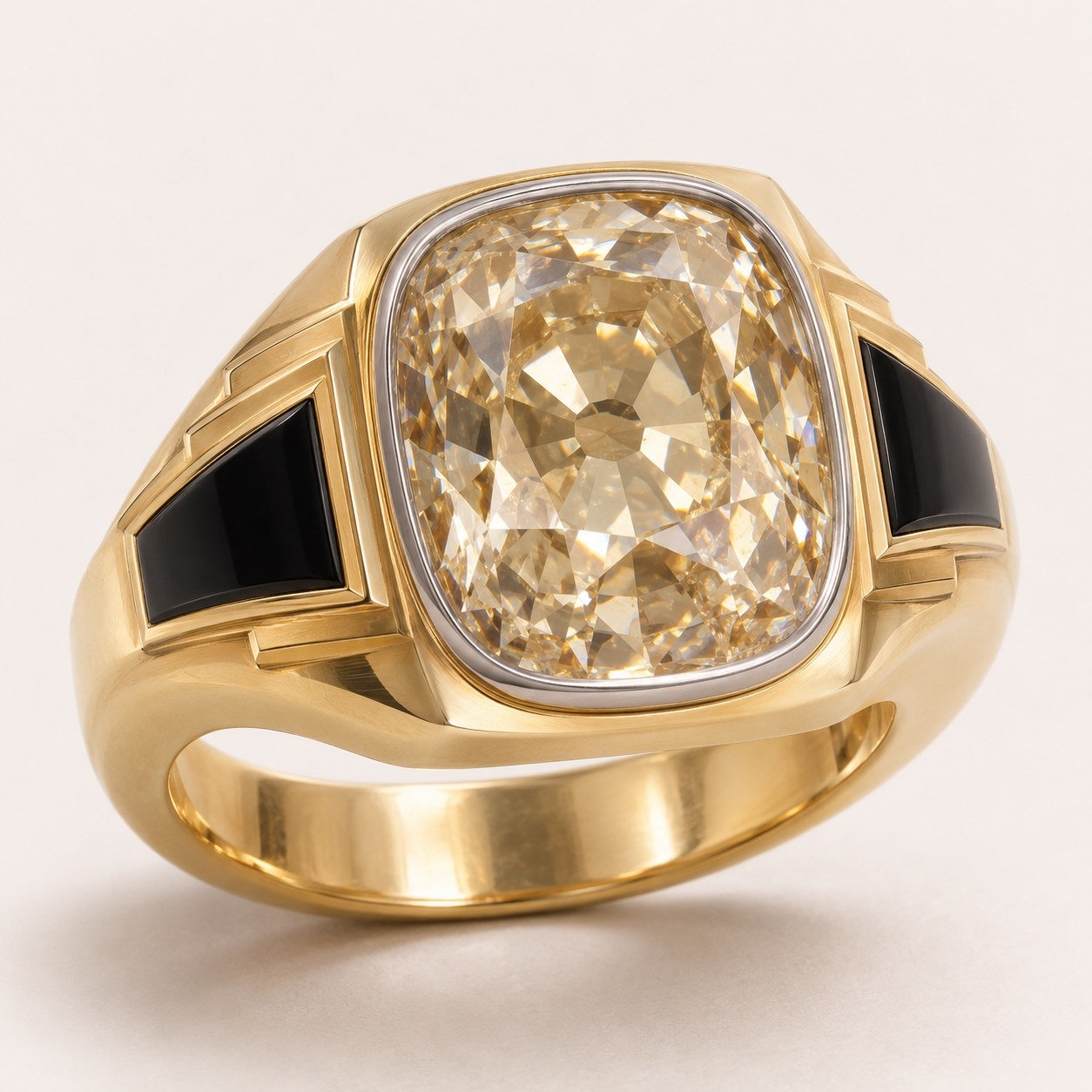
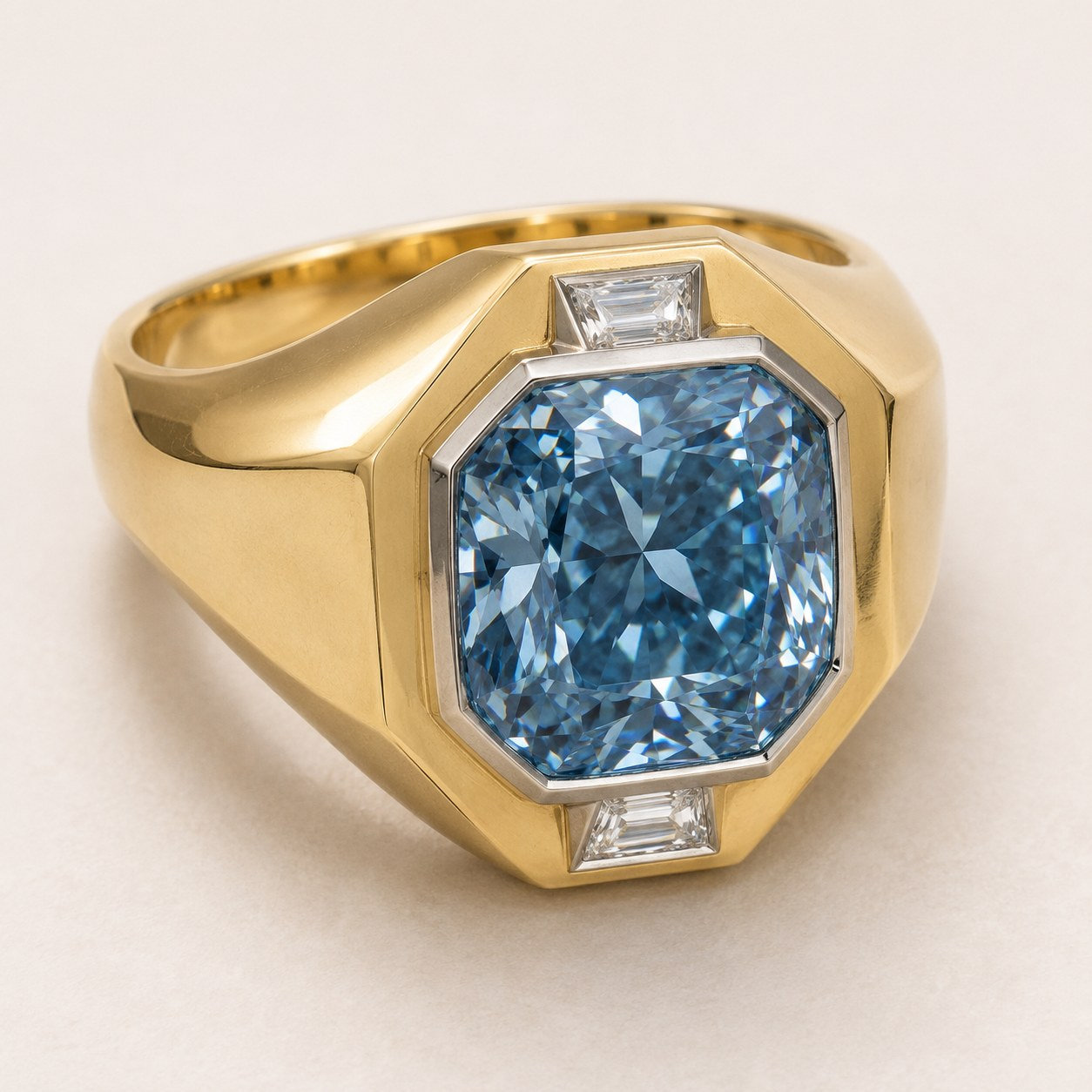
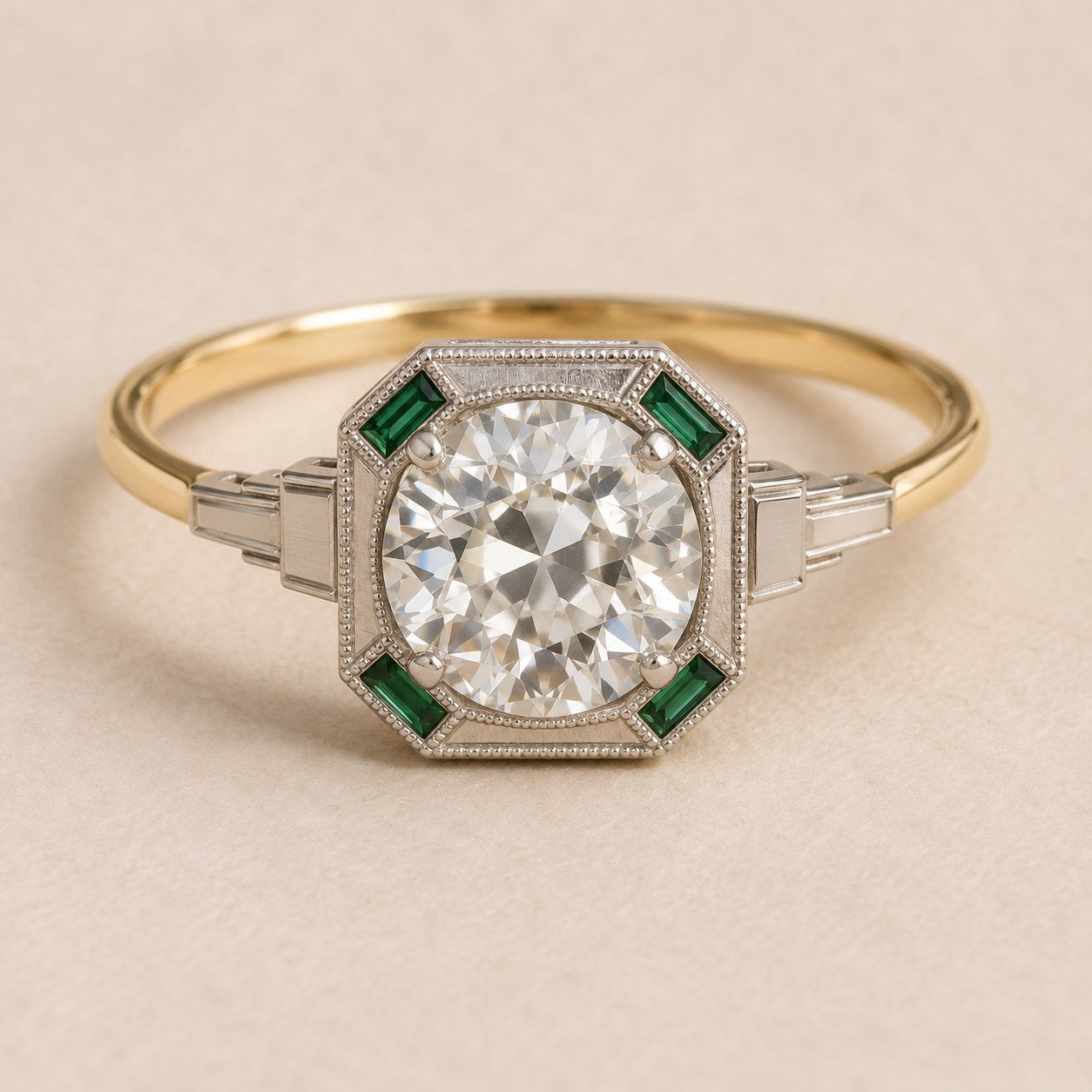
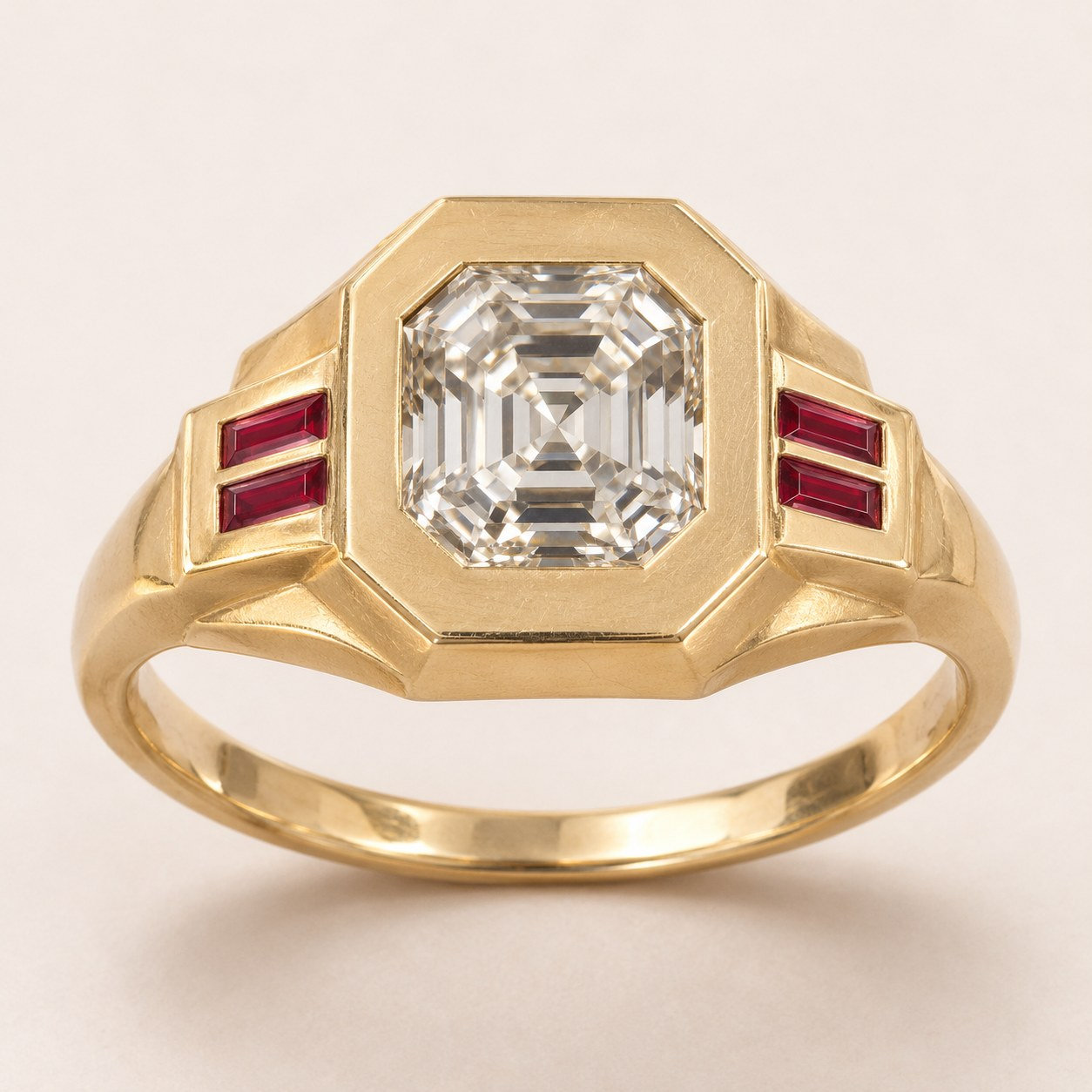
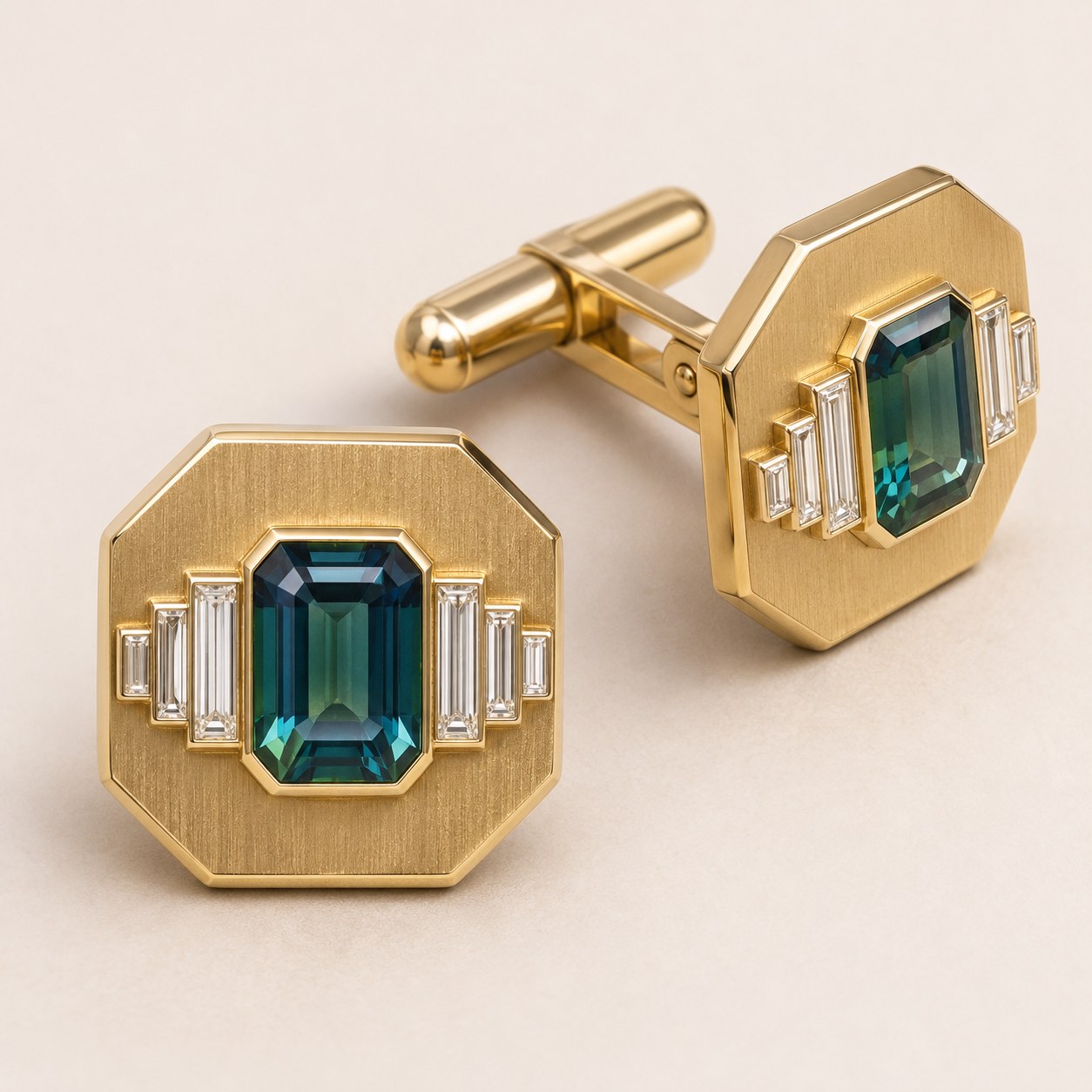
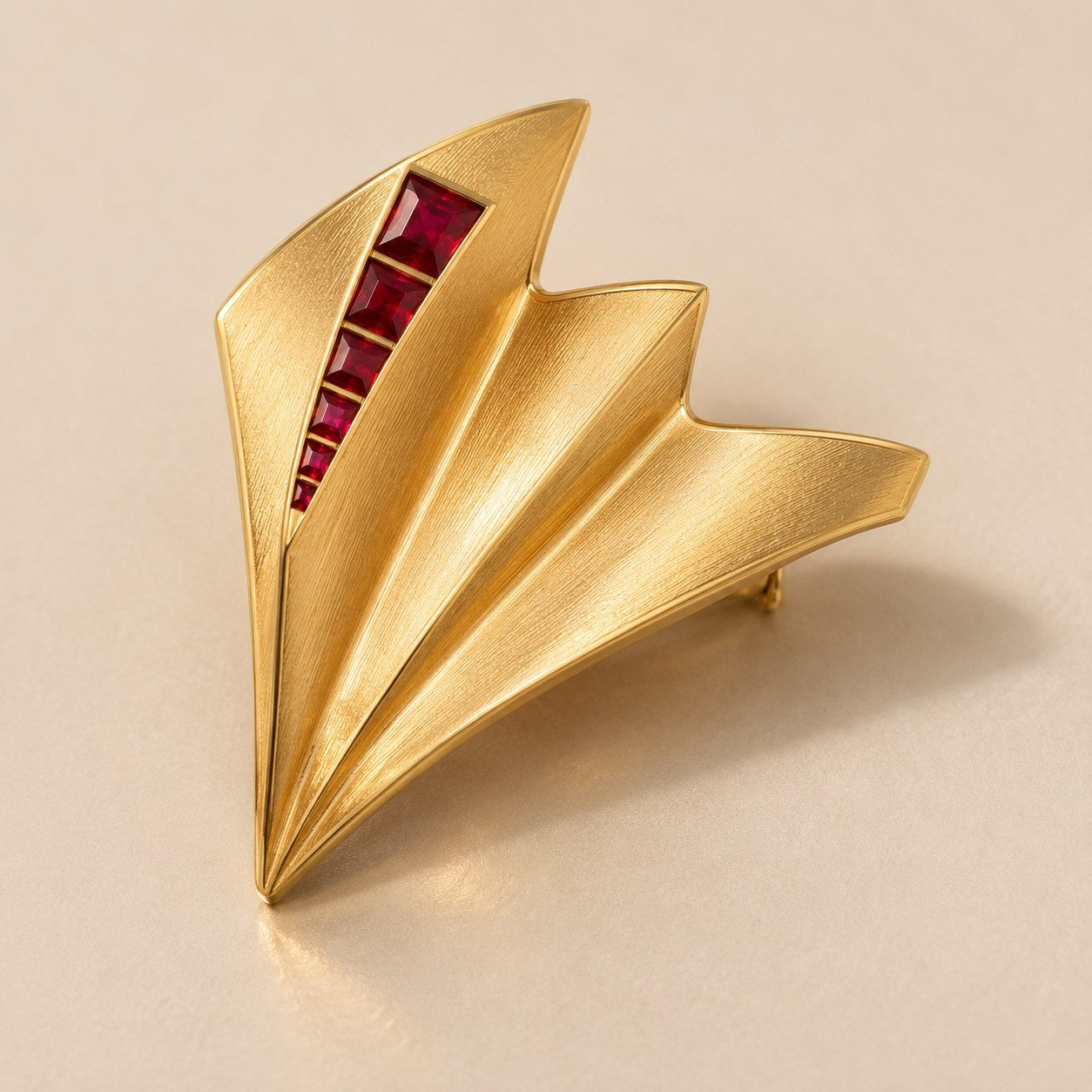
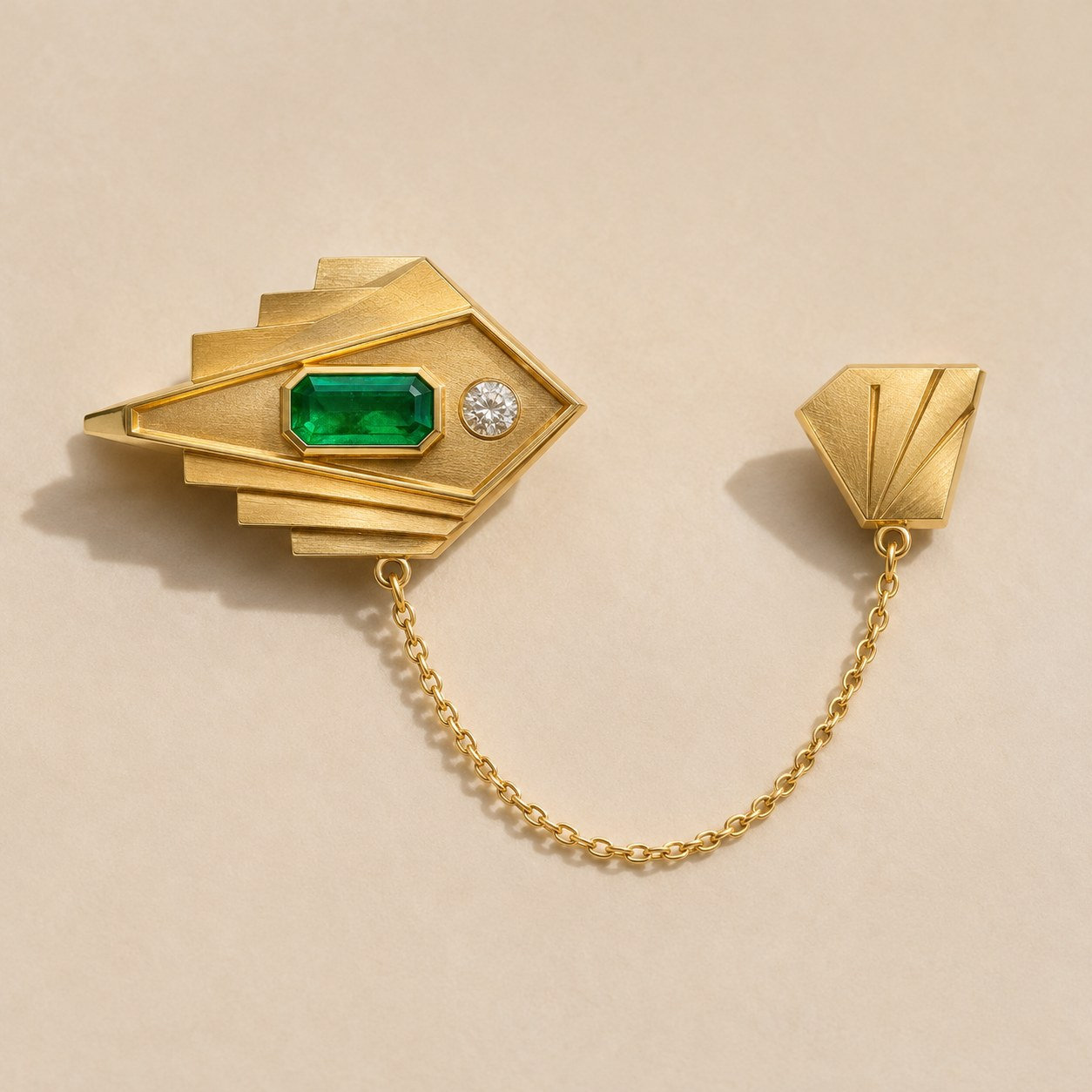
Art Deco jewellery favours clean lines, symmetry and strong geometry: stepped forms, fans, chevrons, octagons and sunbursts. Where earlier Edwardian jewellery was lacy and delicate, Deco was architectural and bold.
The cuts
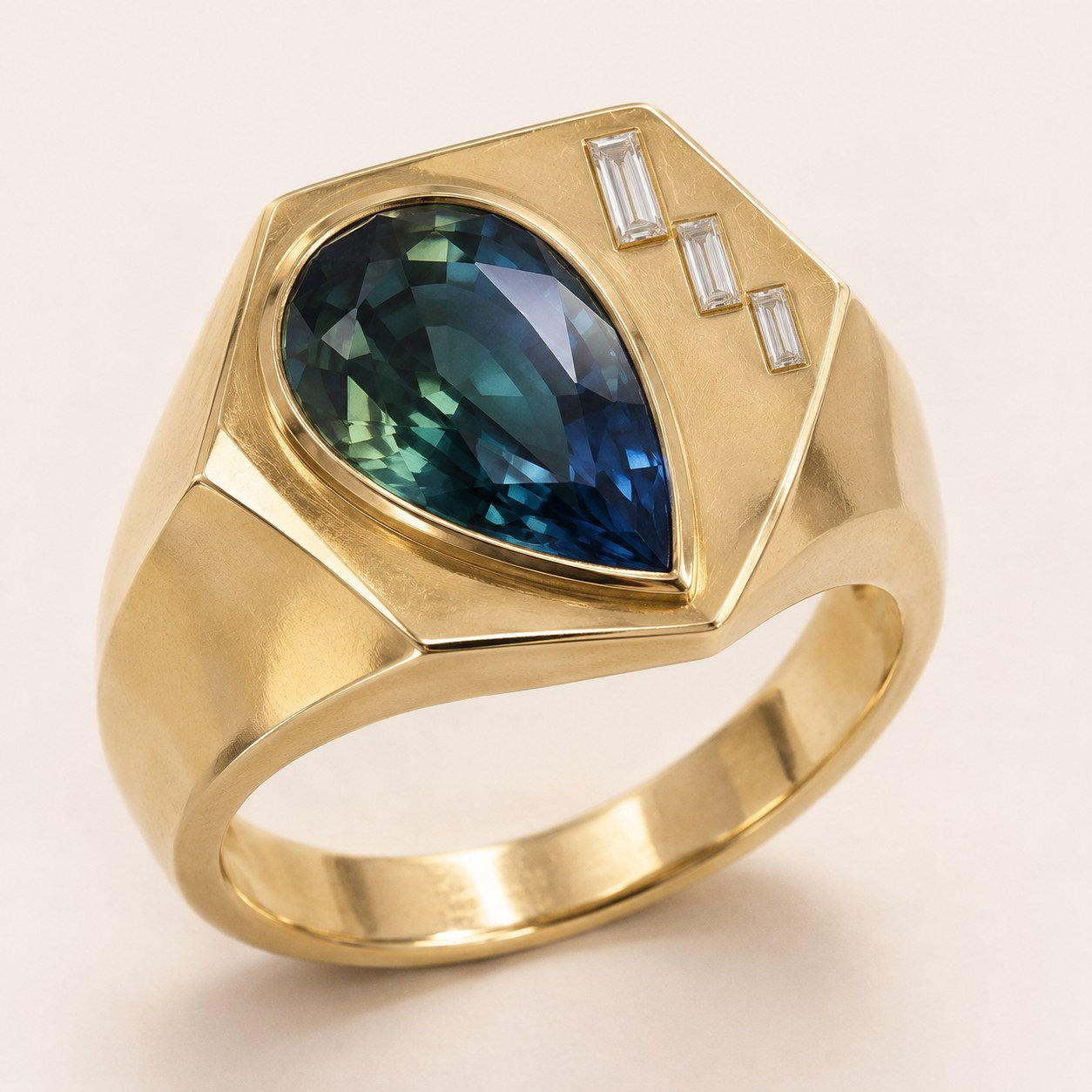
The period loved step-cut stones, whose long parallel facets give a mirrored, hall-of-mirrors effect rather than scattered sparkle. The emerald cut, the baguette and the Asscher cut, a square step cut developed by the Asscher family in Amsterdam in 1902, are all closely associated with the era. Small stones cut to fit a precise shape, known as calibré cutting, outlined designs with lines of colour.
The colours
Contrast was everything: white diamonds against black onyx, or diamonds edged with rubies, emeralds and sapphires. Coloured stones were used as graphic accents rather than as soft decoration.
The metals
Platinum was prized in the 1920s for its strength, allowing very fine, openwork settings. By the 1930s yellow gold returned to fashion in bolder, chunkier designs.
Why it suits engagement rings today
An Art Deco ring feels both vintage and modern, and its geometry makes a modest centre stone look substantial. Read our Art Deco engagement ring guide, or explore The Art Deco Collection, all designed in Dubai and made to order in the UAE.